
Introduction: “Herbal” does not automatically mean “safe”
Herbs are an important part of Thai traditional pharmacy and health care in many cultures, but being “natural” does not make every herbal product automatically safe. Safety depends on the plant species, plant part, preparation method, formulation, dose, duration of use, product quality, the person’s health conditions, and any medicines or other products used at the same time.
The World Health Organization (WHO) emphasizes safety monitoring for traditional medicine products, and Thailand has developed pharmacovigilance experience for traditional medicine within its health system.
1. Start by identifying the correct herb
Common names can refer to different plants in different regions. Different species may have different chemical constituents, effects, and risks. Public-facing content should therefore use a clear Thai name and, where needed, a scientific name or reliable botanical reference.
If the plant cannot be identified confidently, avoid giving specific dosing or safety advice because species-level uncertainty can change both potential benefit and risk.
2. The plant part matters
Roots, rhizomes, bark, leaves, flowers, fruits, seeds, and latex from the same plant can contain different constituents and concentrations. Naming the plant alone may therefore be insufficient when discussing safety or dose.
Website content should specify the plant part whenever it changes the meaning of a traditional preparation or its safety profile, and should not transfer information from one plant part to another without support.
3. Formulation can change the risk
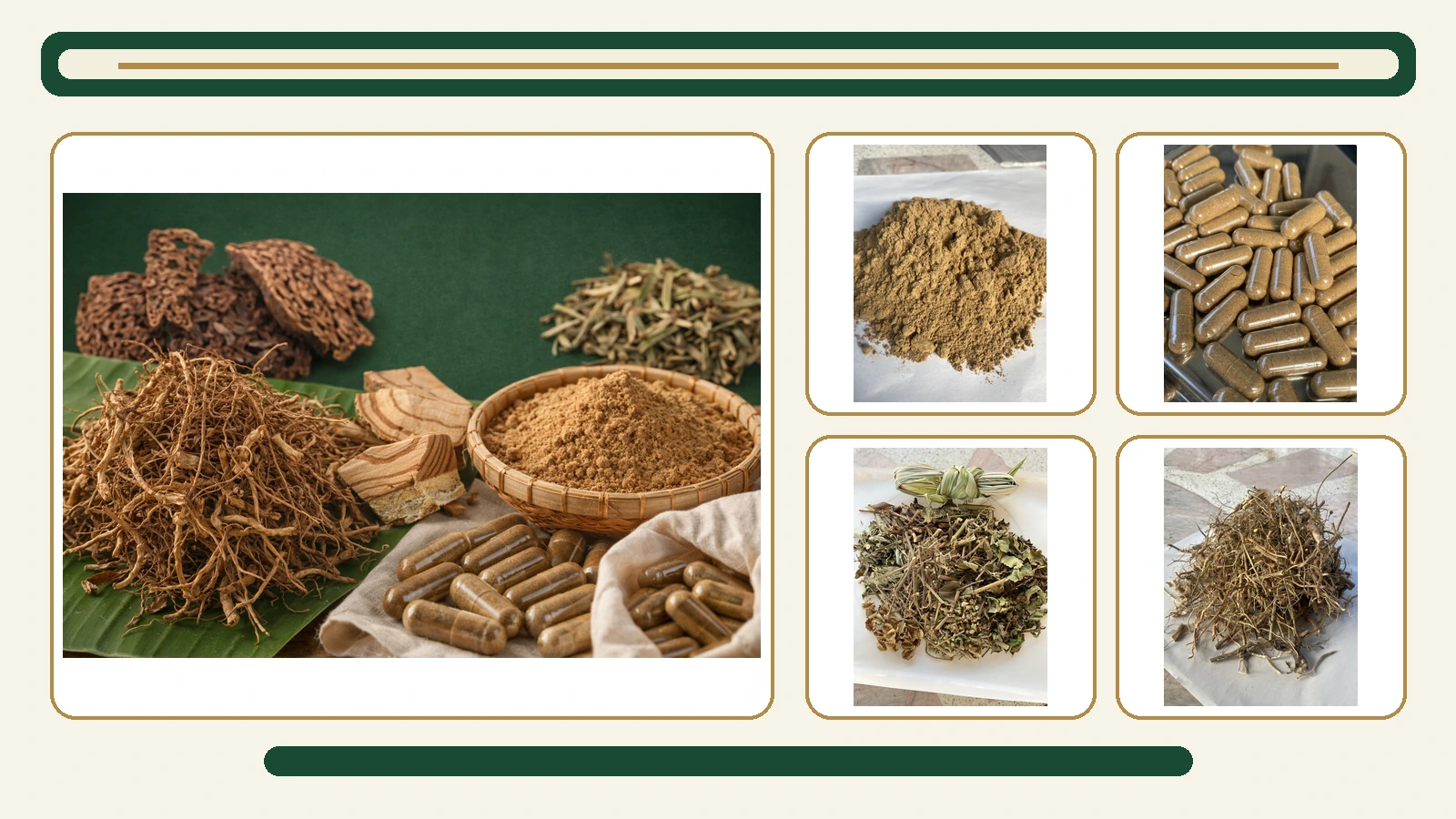
Fresh herbs, decoctions, powders, capsules, concentrated extracts, oils, and combination products should not be assumed to be equivalent even when they come from the same plant. The concentration of active constituents and the amount actually consumed may vary substantially.
NCCIH notes that supplements sold in the marketplace may differ from products used in research. Findings from one specific extract should therefore not automatically be generalized to every product carrying the same herb name.
4. Dose and duration are part of safety
A substance that is tolerated at one dose may become harmful at a higher dose or with prolonged use. Statements such as “this herb is safe” are therefore incomplete if dose and duration are not specified.
For a public website, avoid individualized dosing unless age, body size, health conditions, medicines, pregnancy or breastfeeding status, and the exact formulation have been assessed.
5. Herb–drug interactions
Some herbs can increase or reduce the effects of medicines, alter drug absorption or elimination, or increase the risk of shared adverse effects. NCCIH highlights that interactions are especially important for medicines with a narrow therapeutic range, including drugs such as warfarin, digoxin, and some cancer therapies.
At the same time, NCCIH also notes that evidence for many proposed herb–drug interactions is incomplete, and some concerns are based more on laboratory or animal data than on clinical evidence. Public communication should therefore use wording such as “may interact” or “should be reviewed before combined use” rather than making unsupported absolute claims.
6. Groups requiring extra caution
- Pregnant or breastfeeding people.
- Children and older adults.
- People with liver, kidney, heart, or multiple chronic diseases.
- People using anticoagulants, immunosuppressants, heart medicines, antiseizure medicines, or drugs that require close blood-level monitoring.
- People preparing for surgery or an invasive procedure.
- People with a history of allergy to herbs, foods, or plant-derived products.
These groups should not start an herbal product based only on general internet advice.
7. Adverse effects and pharmacovigilance
Traditional medicine products can cause adverse effects just like other health products. WHO encourages countries to develop pharmacovigilance systems that monitor and report suspected adverse reactions associated with traditional medicine products.
If herbal use is followed by breathing difficulty, swelling of the face or tongue, severe hives, fainting, loss of consciousness, jaundice, abnormal urination, severe palpitations, or rapidly developing concerning symptoms, the product should be stopped and urgent medical assessment sought.
8. Product quality, contamination, and source
Safety depends not only on the herb itself but also on cultivation, harvesting, processing, storage, and quality control. WHO has issued guidance on herbal raw materials, production, and contaminant control to support product quality and safety.
NCCIH also warns that some supplement categories may contain contaminants or undeclared active ingredients, particularly certain products marketed for weight loss, sexual enhancement, or performance enhancement.
9. Traditional knowledge and present-day herbal use
Traditional Thai formulas and pharmacy knowledge have historical, cultural, professional, and educational value. When used today, however, product quality, contraindications, medicine interactions, and current safety information should also be considered.
A long history of use does not prove safety for every person, every dose, or every formulation. Conversely, limited modern evidence should not be used to dismiss the cultural and historical value of the underlying knowledge.
10. Checklist before using an herbal product
- Do you know the exact herb and plant species?
- Do you know which plant part is being used?
- Is it food, fresh herb, decoction, powder, capsule, or concentrated extract?
- Is there reliable labeling or dosing information?
- Do you have liver, kidney, heart, or other chronic disease?
- Are you pregnant, breastfeeding, or preparing for surgery?
- Do you use regular medicines or other supplements that may interact?
- Does the product come from a traceable source?
11. Summary
Appropriate herbal use requires more than knowing the plant name. Species, plant part, formulation, dose, duration, product quality, chronic disease, medicines, and individual risk all matter. Thai Traditional Medicine can preserve the value of traditional herbal knowledge while also using modern safety principles and pharmacovigilance to support responsible care.
References
- World Health Organization Regional Office for South-East Asia. The Pharmacovigilance System for Traditional Medicine in Thailand. 2017.
- World Health Organization. Pharmacovigilance for traditional medicine products: Why and how?. 2018.
- World Health Organization. Traditional medicine. Questions and Answers. Used for regulation, safety, quality control, and herbal-medicine standards.
- National Center for Complementary and Integrative Health (NCCIH). Herb-Drug Interactions. Clinical Digest, December 2024.
- National Center for Complementary and Integrative Health (NCCIH). 6 Tips: How Herbs Can Interact With Medicines.
- National Center for Complementary and Integrative Health (NCCIH). Safe Use of Complementary Health Products and Practices.
- National Center for Complementary and Integrative Health (NCCIH). Dietary and Herbal Supplements.
Health Information and Safety
This article is provided for general education about Thai traditional medicine and health. It is not a substitute for diagnosis, treatment, or individualized advice from a qualified health professional.